Home/Trades/Insulator (Lagger)
CCQ trade · Insulator (Lagger)
Insulator (Lagger) in Québec: wage, competency card and outlook.
What an insulator (lagger) does, what it pays under the CCQ, how you get your competency card, and where the market is headed. The facts, sourced, no fluff.
$47.85 to $50.84 / hr CCQ journeyperson rate by sector · in effect since April 26, 2026
CCQ wage
How much does an insulator (lagger) earn in Québec?
$47.85 – $50.84 / hour (journeyperson, by sector, April 26, 2026)
Hourly rates are set by the collective agreements of Québec's construction industry and vary by sector: $47.85/h in light residential, $50.20/h in heavy residential, $50.79/h in institutional-commercial and industrial and $50.84/h in civil engineering and roads (journeyperson rate, effective April 26, 2026). Apprentices earn a percentage of that rate depending on their apprenticeship period. Official grids published by the ACQ (residential and institutional-commercial-industrial) and the ACRGTQ (civil engineering and roads).
| Sector | Journeyperson rate |
|---|---|
| Light residential | $47.85/hr |
| Heavy residential | $50.20/hr |
| Institutional-commercial & industrial | $50.79/hr |
| Civil engineering & roadwork | $50.84/hr |
The trade
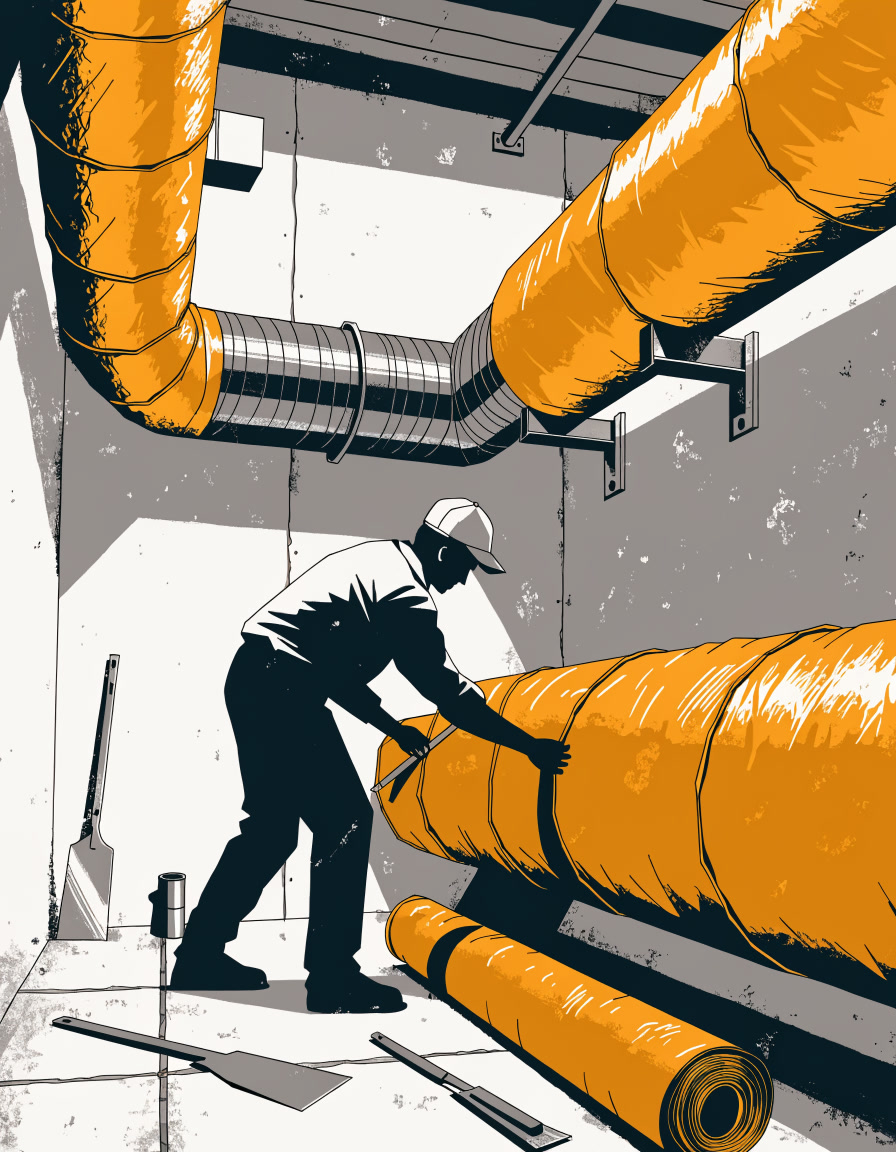
Insulators install, repair, and retrofit thermal insulation systems that maintain the temperature of a liquid or gas. They insulate piping networks, air ducts, and tanks, apply rigid or semi-rigid insulation, and finish the job with protective coverings (vapour barriers, metal jacketing). Most of their work is in institutional-commercial buildings and industrial facilities, often at height and in tight, awkward spaces.
Competency card
How to become a CCQ-carded insulator (lagger).
Insulators must hold a CCQ competency card. The apprentice certificate (CCA) is issued after completing the DEP in Insulation (5378, 900 hours, offered in the Montreal area) and presenting a job guarantee of at least 150 hours over 3 consecutive months with a CCQ-registered employer. The apprenticeship covers 3 periods of 2,000 hours each (6,000 hours total), after which the apprentice can sit the provincial qualification exam leading to the journeyperson certificate (CCC). In the institutional-commercial, industrial, and civil engineering sectors, the ratio on the books is 2 journeypersons per apprentice; in residential, it's 1:1. On any given workday, the minimum required ratio is 1 journeyperson per apprentice.
Outlook
The insulator (lagger) market, per the CCQ.
The CCQ rates job prospects for insulators as 'excellent': even though demand stays stable, a significantly aging workforce, high turnover, and too few new graduates are creating sustained worker shortages in the market. In 2024, 1,374 insulators were active on Quebec job sites and 141 companies were recruiting. That same year, 141 new apprentices were admitted, above the 2020-2023 annual average of 101, but still modest against the pace of departures. Among journeypersons, the average age is 44.2 and 20% are 55 or older, pointing to a coming wave of retirements. The institutional-commercial sector, which accounts for 81% of hours worked, is expected to stay strong in the coming years.
What it takes
The skills in demand.
- Valid CCQ competency certificate (apprentice or journeyperson) — mandatory to work on job sites governed by the R-20 Act
- ASP Construction card (general health and safety on job sites) — required to obtain the CCQ competency certificate
- Completed DEP in Insulation (5378, 900 hours) or a CCQ-recognized equivalent
- Skilled at insulating piping, air ducts, and tanks, installing rigid or semi-rigid insulation, and applying protective finishes (vapour barriers, metal jacketing)
- Experience in the institutional-commercial or industrial sector (99% of hours worked in the trade), comfortable working at height and in tight, awkward spaces
Frequently asked questions
The insulator (lagger) trade, plainly.
Do I need a DEP in Insulation to get into the trade?
It's the most direct path: the DEP in Insulation (5378, 900 hours, offered in the Montreal area) gets you a CCQ apprentice certificate right at graduation, provided you present a job guarantee of at least 150 hours over 3 consecutive months with a CCQ-registered employer. Other entry paths exist too (experience recognition, apprenticeship during your studies) — check ccq.org directly to see which one applies to your situation. The timing is good: the CCQ rates the trade's prospects as 'excellent.' In 2024, 1,374 insulators were active and 141 companies were recruiting, with 141 new apprentices admitted — above the 101-per-year average for 2020-2023, but still modest against the demand created by retirements.
How long before I become a journeyperson insulator?
Once you have your apprentice certificate (CCA), you need to log 3 apprenticeship periods of 2,000 hours each — 6,000 hours total — before you can sit the provincial qualification exam. Working full-time, that's roughly 3 to 4 years. Your rate climbs with each period during your apprenticeship: in civil engineering, for example, you go from $30.50/h in period 1 to $50.84/h once you're a journeyperson (April 26, 2026). Passing the provincial exam earns you the journeyperson certificate (CCC). This is a trade where new talent is in demand: among active journeypersons, the average age is 44.2 and 20% are 55 or older, pointing to several retirements ahead and room for newly qualified workers in the coming years.
Which sector will I work in most as an insulator?
Overwhelmingly in institutional-commercial: that sector accounts for 81% of insulators' work volume — hospitals, schools, office buildings, shopping centres. Industrial follows with 18% of hours (plants, process equipment, tanks), while civil engineering (1%) and residential (0%) are marginal. In practice, you'll spend most of your time insulating piping, air ducts, and tanks, installing rigid or semi-rigid insulation, and applying protective finishes, often at height or in tight, awkward spaces. The CCQ expects the institutional-commercial sector to stay strong in the coming years, and the industrial sector should also keep offering a steady volume of work — two good signs for job stability in this trade.
Sector breakdown, regional mobility and apprenticeship progression figures are drawn from Commission de la construction du Québec data. Hourly rates: official grids published by the ACQ (residential, institutional-commercial and industrial) and the ACRGTQ (civil engineering and roads), in force since April 26, 2026. acq.org
Are you an insulator (lagger)?
Find work near you.
We text you fast, and the employer pays — never you. Pick your area:
Hiring an insulator (lagger)?
We bring you carded people, fast.
Permanent placement, 90-day guarantee, no surprise quotes. Candidate response in under 2 minutes.