Home/Trades/Resilient Flooring Installer
CCQ trade · Resilient Flooring Installer
Resilient Flooring Installer in Québec: wage, competency card and outlook.
What a resilient flooring installer does, what it pays under the CCQ, how you get your competency card, and where the market is headed. The facts, sourced, no fluff.
$41.71 to $49.07 / hr CCQ journeyperson rate by sector · in effect since April 26, 2026
CCQ wage
How much does a resilient flooring installer earn in Québec?
$41.71 – $49.07 / hour (journeyperson, by sector, April 26, 2026)
Hourly rates are set by the collective agreements of Québec's construction industry and vary by sector: $41.71/h in light residential, $44.25/h in heavy residential, $49.07/h in institutional-commercial and industrial and $49.07/h in civil engineering and roads (journeyperson rate, effective April 26, 2026). Apprentices earn a percentage of that rate depending on their apprenticeship period. Official grids published by the ACQ (residential and institutional-commercial-industrial) and the ACRGTQ (civil engineering and roads).
| Sector | Journeyperson rate |
|---|---|
| Light residential | $41.71/hr |
| Heavy residential | $44.25/hr |
| Institutional-commercial & industrial | $49.07/hr |
| Civil engineering & roadwork | $49.07/hr |
The trade
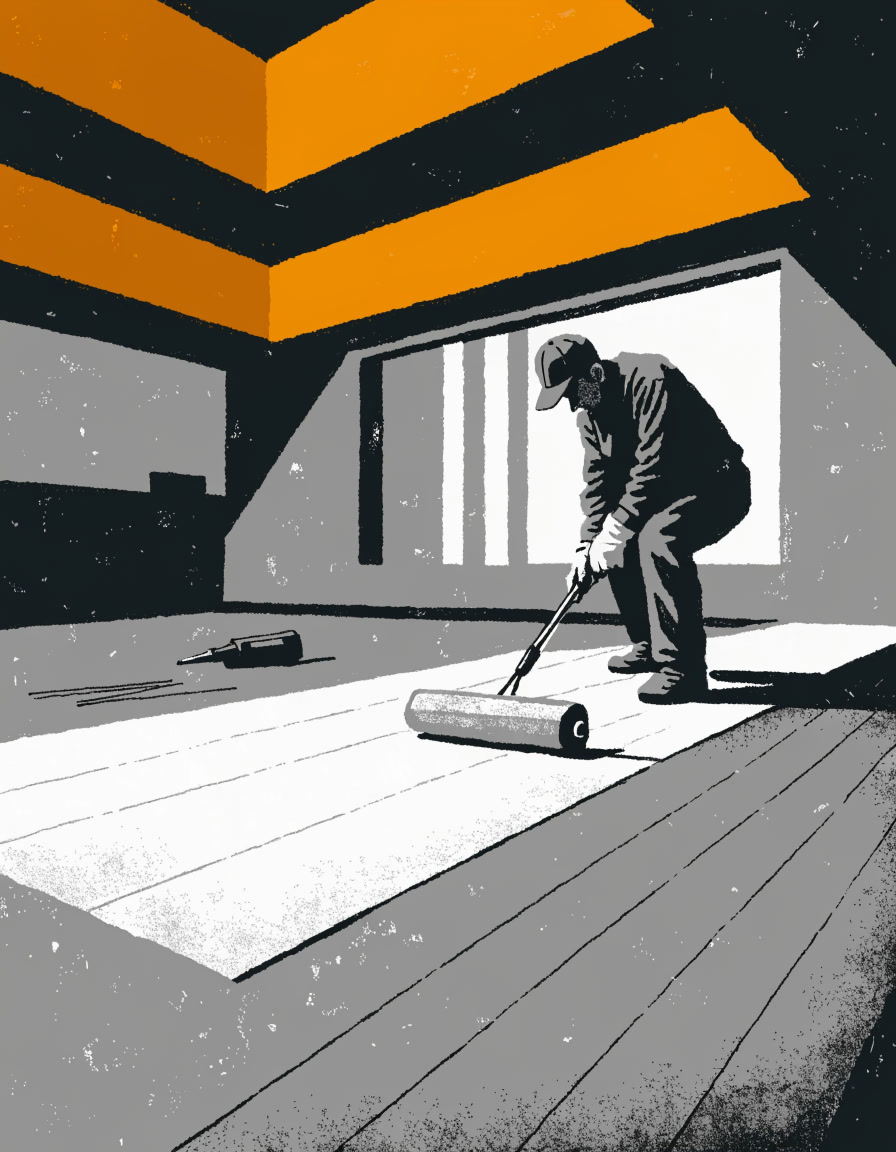
Resilient flooring installers lay resilient floor coverings — vinyl, linoleum, rubber, cork, and asphalt tile — along with glued-down carpet, rugs, and synthetic turf on construction sites. They prepare and level surfaces, cut and fit materials, apply adhesives, and ensure a durable installation in institutional, commercial, and residential buildings.
Competency card
How to become a CCQ-carded resilient flooring installer.
The resilient flooring installer trade is regulated by the CCQ. Entry starts with the apprentice competency certificate (CCA), earned after completing the DEP in Resilient Flooring Installation (program 5334, 900 hours) and presenting a job guarantee of at least 150 hours over 3 consecutive months with a CCQ-registered employer. The apprentice must then complete 3 apprenticeship periods of 2,000 hours each (6,000 hours total), after which they're eligible to sit the provincial qualification exam. Passing that exam leads to the journeyperson competency certificate (CCC). The apprentice-to-journeyperson ratio varies by sector — check the official grid at ccq.org for the ratio that applies to your job site.
Outlook
The resilient flooring installer market, per the CCQ.
In 2024, 1,312 resilient flooring installers were active on Quebec job sites, with an average age of 42.6 that climbs to 48.5 among journeypersons — a clear sign of an aging workforce and retirements to anticipate. 122 new apprentices were admitted into the trade that year, while 513 companies were recruiting at the same time, a gap that illustrates the pressure on the pool. The CCQ rates job prospects for this trade as excellent, citing low labour availability, an aging workforce, and too few new graduates. The institutional-commercial sector, which accounts for 89% of the trade's work volume, drives most of that demand.
What it takes
The skills in demand.
- Valid CCQ competency certificate (apprentice or journeyperson) — mandatory to work on CCQ-regulated job sites
- Completed DEP in Resilient Flooring Installation (program 5334) or a CCQ-recognized equivalent
- Current ASP Construction card (general health and safety on construction sites)
- Skilled at installing vinyl, linoleum, rubber, and cork flooring and laying carpet and rugs, including surface preparation and levelling
- Experience in the institutional-commercial sector, which accounts for 89% of hours worked in the trade
Frequently asked questions
The resilient flooring installer trade, plainly.
I have my DEP in Resilient Flooring Installation. How do I get my CCQ card to work on job sites?
With your DEP in Resilient Flooring Installation, you can apply for your apprentice competency certificate (CCA) from the CCQ as soon as you land a job guarantee of at least 150 hours over 3 consecutive months with a registered employer. That certificate gets you onto job sites. From there, you log 6,000 apprenticeship hours split across three periods of 2,000 hours each, then sit the provincial qualification exam to become a journeyperson (CCC). The market is working in your favour to find that employer quickly: the CCQ rates job prospects for this trade as excellent, and in 2024, 513 companies were recruiting resilient flooring installers in Quebec. With only 122 new apprentices admitted that year, employers are actively looking for new talent to sign those job guarantees.
Which sector will I work in most as a resilient flooring installer?
In 2024, 89% of hours worked by resilient flooring installers were in the institutional-commercial sector — hospitals, schools, office buildings, retail stores. Residential accounts for 7% of hours and civil engineering and roads for 4%; the industrial sector is practically absent (0%). In practice, you'll spend most of your time installing vinyl, linoleum, rubber, or carpet in large commercial and public buildings. It's also the best-paying sector for this trade: the journeyperson rate reaches $49.07 an hour in institutional-commercial, industrial, and civil engineering, versus $41.71 in light residential (April 26, 2026). Building experience in institutional-commercial work maximizes both your job opportunities and your income.
Is this a good time to get into the trade in Quebec?
Yes. The CCQ rates job prospects for this trade as excellent, due to low labour availability, an aging workforce, and too few new graduates. The numbers back it up: in 2024, 1,312 resilient flooring installers were active in Quebec, with an average age of 42.6 that climbs to 48.5 among journeypersons — a lot of retirements are on the horizon. Only 122 new apprentices were admitted that year, while 513 companies were recruiting. That imbalance between new talent and demand gives you good odds of finding work quickly if you enter the trade now, especially in the institutional-commercial sector, which accounts for 89% of the volume.
Sector breakdown, regional mobility and apprenticeship progression figures are drawn from Commission de la construction du Québec data. Hourly rates: official grids published by the ACQ (residential, institutional-commercial and industrial) and the ACRGTQ (civil engineering and roads), in force since April 26, 2026. acq.org
Are you a resilient flooring installer?
Find work near you.
We text you fast, and the employer pays — never you. Pick your area:
Hiring a resilient flooring installer?
We bring you carded people, fast.
Permanent placement, 90-day guarantee, no surprise quotes. Candidate response in under 2 minutes.